

Life is Abundant at Printed Matter’s LA Art Book Fair
Saturday May 17th, at 2pm - Booth D26 (more info here)
On Saturday May 17th at our booth at the LA Art Book Fair, Richard Nielsen from Metabolic Studio’s Optics Division, and Wendy Isabella Escobar Procopio from Metabolic Studio’s Farmlab, will be talking about their new portfolio box Life is Abundant.
Inspired by the life emerging from Moving Mountains, Metabolic Studio’s project transplanting rescued Topanga Canyon landslide soil to an industrial corridor along the Los Angeles River, the Life is Abundant photograms — made using sunlight and natural processes to imprint images — express the vitality of the native plants thriving in their new landscape.
Below is our guide to seed collecting, sharing our knowledge and inspiring you to collect life of your own.
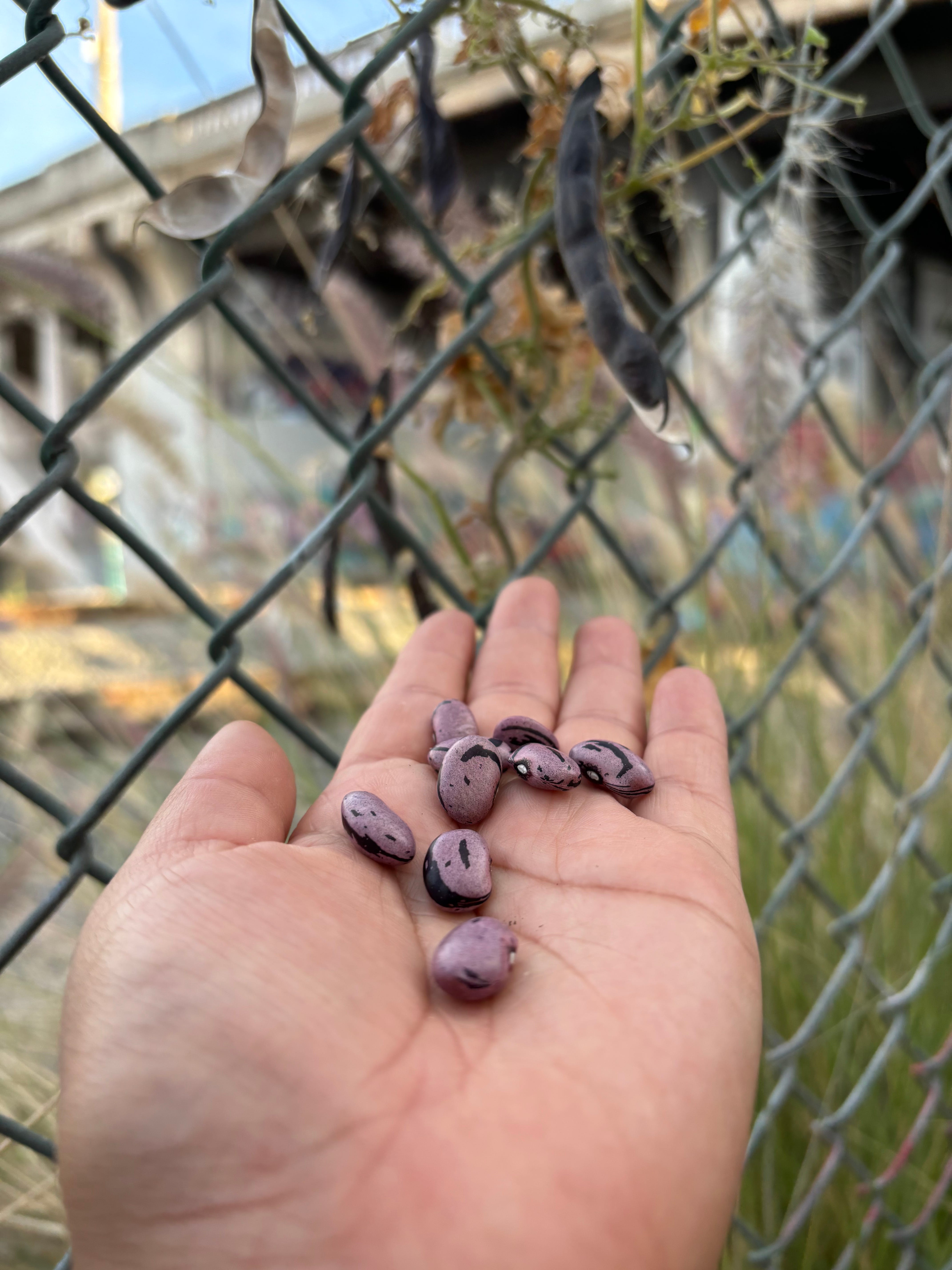
Seeds are not just biological units; they are carriers of cultural memory, biodiversity, and ecological intelligence. To steward seeds is to protect the very foundation of life. Dr. Vandana Shiva argues that when communities save and exchange seeds, they maintain control over their food systems, their health, and their future—free from dependence on corporate and colonial structures. Lauren Bon and Metabolic Studio advocate for "seed sovereignty" as the right of growers and communities to save, breed, and exchange seeds. This is a form of decolonization: reclaiming ancestral practices, resisting dependency on foreign technologies, and preserving the commons against enclosure.
It's also a feminist and ecological practice, recognizing the historical role of women as seed keepers and the interdependence between humans and the earth. Seed saving is, in this sense, an act of grassroots democracy. It decentralizes power, supports local economies, and strengthens community resilience in the face of climate change, market instability, and ecological collapse. In contrast to corporate-controlled monocultures, diverse and locally adapted seeds are the basis for a more just, regenerative, and sovereign food system. Here, we outline how to identify seed, how to collect and process seed, and how to store and share seed throughout your community.
Identifying seed begins with knowing the life cycle of the plant you’re working with—observing its flowers, fruiting body, and eventual drying or browning phase. A good general rule is to wait until the seed pods or heads are fully mature, often when they’ve dried on the plant, turned brown or brittle, and the seeds inside are firm, dark, and hard rather than green or soft. Each plant has its own signs: for example, in legumes, look for dried, rattling pods; in sunflowers, the back of the flower head will yellow or brown and seeds will loosen easily.
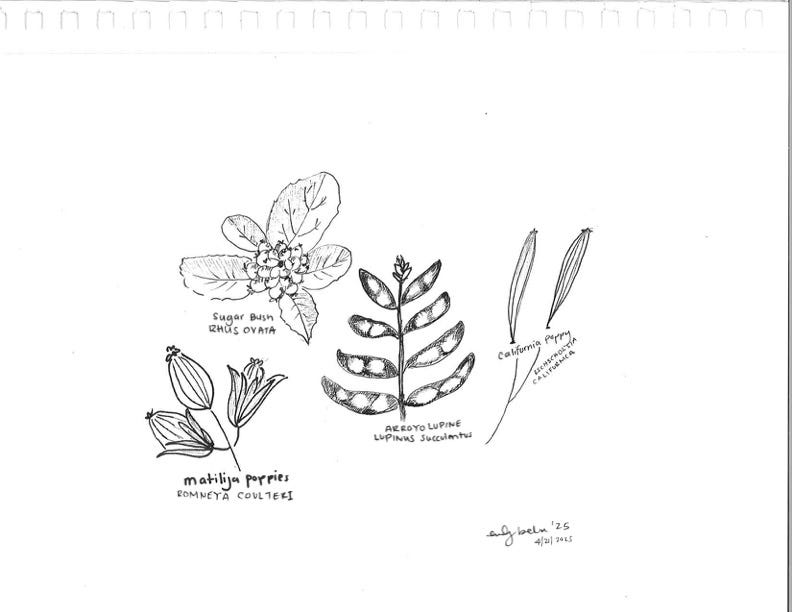
Step 1 - Identifying Seed
Learning to recognize the seed-bearing parts—whether it’s a pod, capsule, cone, or berry—and watching for seasonal timing, helps ensure you’re collecting viable, mature seed. Patience and observation are key: collecting too early can mean immature seed that won’t germinate, while waiting too long risks losing seed to weather, wildlife, or dispersal.
Seed collection is an act of love, care, and resistance. To gather seeds is to reclaim a birthright — the ancient practice of saving, sharing, and stewarding life. It can be as simple as walking through a garden, field, or sidewalk edge, guided by curiosity and the rhythm of the seasons. Look for dried pods, husks, or fruits; hold them in your hand and listen to their story. Invite others — children, elders, neighbors — and turn it into a shared ritual of noticing, learning, and reciprocity.
Step 2 - Collecting Seed
Use paper envelopes or paper bags to store any dried pods, flowers, or seed heads to ensure the seed you collect remains dry until you are able to process it for long-term storage. Use recycled jars or plastic bags to collect fleshy seeds and fruits. Always label the seed you collect with names, dates, and places, honoring the lineage each seed holds and to keep good notes for future reference. In the spirit of reciprocity, we treat seeds not as commodities, but as relatives — carriers of memory, resilience, and sovereignty. Let the practice be joyful, embodied, and rooted in community, knowing that every seed you save is a small act of defiance and hope. In return for the abundance our plant relatives provide you, we ask that you embody reciprocity by giving an offering to the plant in exchange for its seed – water, a piece of your hair, and even some careful weeding are all great ways to honor our living systems.
Processing seed is the gentle art of preparing life for rest. Once collected, seeds need care to ensure they remain viable and vibrant for seasons to come. Dry seeds — like those from sunflowers, beans, or grasses — can often be rubbed, shaken, or winnowed free from their pods, husks, or flower heads. A paper bag and some patient hands go a long way. Let them finish drying in a well-ventilated, shady spot until they feel hard and brittle to the touch.
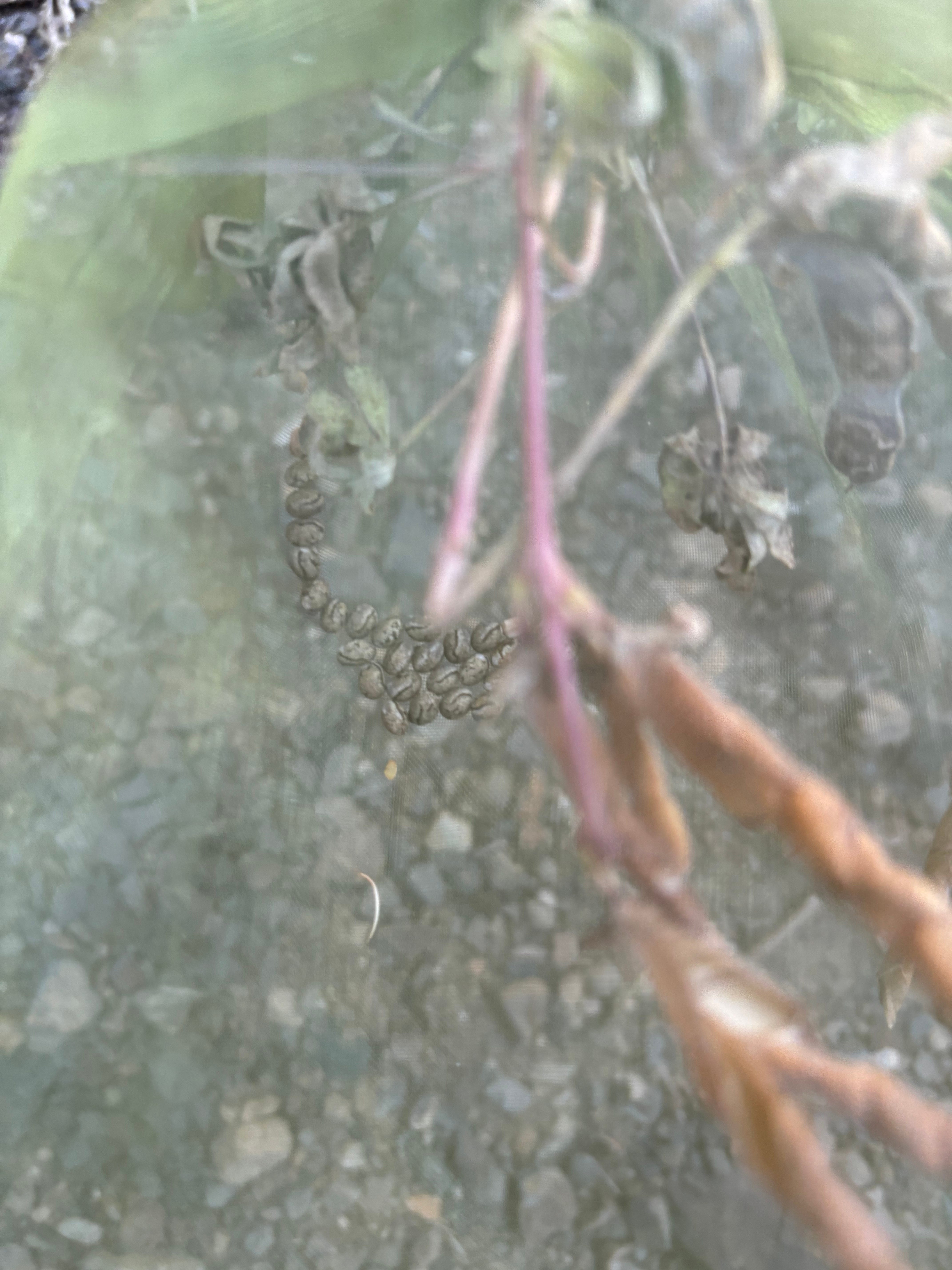
Step 3 - Processing Seed
Fleshy seeds — like those from tomatoes, squash, or berries — require a bit more attention: rinse away the pulp with water, sometimes letting them ferment for a day or two to remove natural germination inhibitors. Spread them on screens or paper towels to dry fully before storage. Through this process, we not only protect the seed, but also deepen our relationship with the plant. In the spirit of care and reverence, we treat each seed as a promise — cleaned, dried, and stored with intention, ready to one day wake and grow again.
Step 4 - Storing Your Seed
Storing seeds is an act of trust in the future. Once your seeds are fully dried, they’re ready to rest — but how and where you store them can mean the difference between life held and life lost. Keep seeds in cool, dark, and dry places: envelopes, glass jars, or tins work beautifully, especially when labeled with the plant name, variety, and harvest date. Silica packets or a bit of rice can help reduce moisture. A closet, cupboard, or even the fridge can serve as a seed sanctuary, as long as temperatures stay steady. The key is to protect them from heat, light, and humidity — the very conditions that awaken them.
Check in on your seeds now and then, as you would a pantry of preserved food, and remember: seeds are most powerful when they’re shared. As Indigenous communities worldwide teach us, the seed is a commons — storing them is not about possession, but about care, continuity, and the invitation to grow again, together.
Step 5 - Sharing Your Seed with the Meandros Network!
In the spirit of Meandros—a cyborg watershed and a shared act of mutual care—we invite you to gather in a circle, whether it's two people or twenty. Place your seeds in the center, in jars, envelopes, or bowls—offerings from land, time, and intention. These seeds are not just carriers of life; they are living archives of relationship: to soil, to story, to community. Take a collective breath. Acknowledge the original stewards of the land where you stand. Offer gratitude to the plants, to the ancestors who carried these seeds through generations, and to the people who tended the landscapes they emerged from.
You might begin by saying:
“These seeds carry stories, memories, and futures. Today, as part of Meandros, we honor the water pathways that once flowed freely, the forests that once stood here, and the many hands that shaped this place. May these seeds find good soil and loving hands.”
One by one, invite participants to name a seed they brought. They may also share a story, a use, or a lesson from the plant. Let the pace be slow and intentional. Encourage gifting, trading, and generosity—echoing the Meandros ethos of public engagement, land regeneration, and artistic intervention.
To close, re-form the circle and speak aloud together, or in call and response:
“May what we plant grow strong. May what we share return. May we always remember that we are part of the seed, and the seed is part of us. And may this act ripple outward like water, rewilding our city one site at a time.
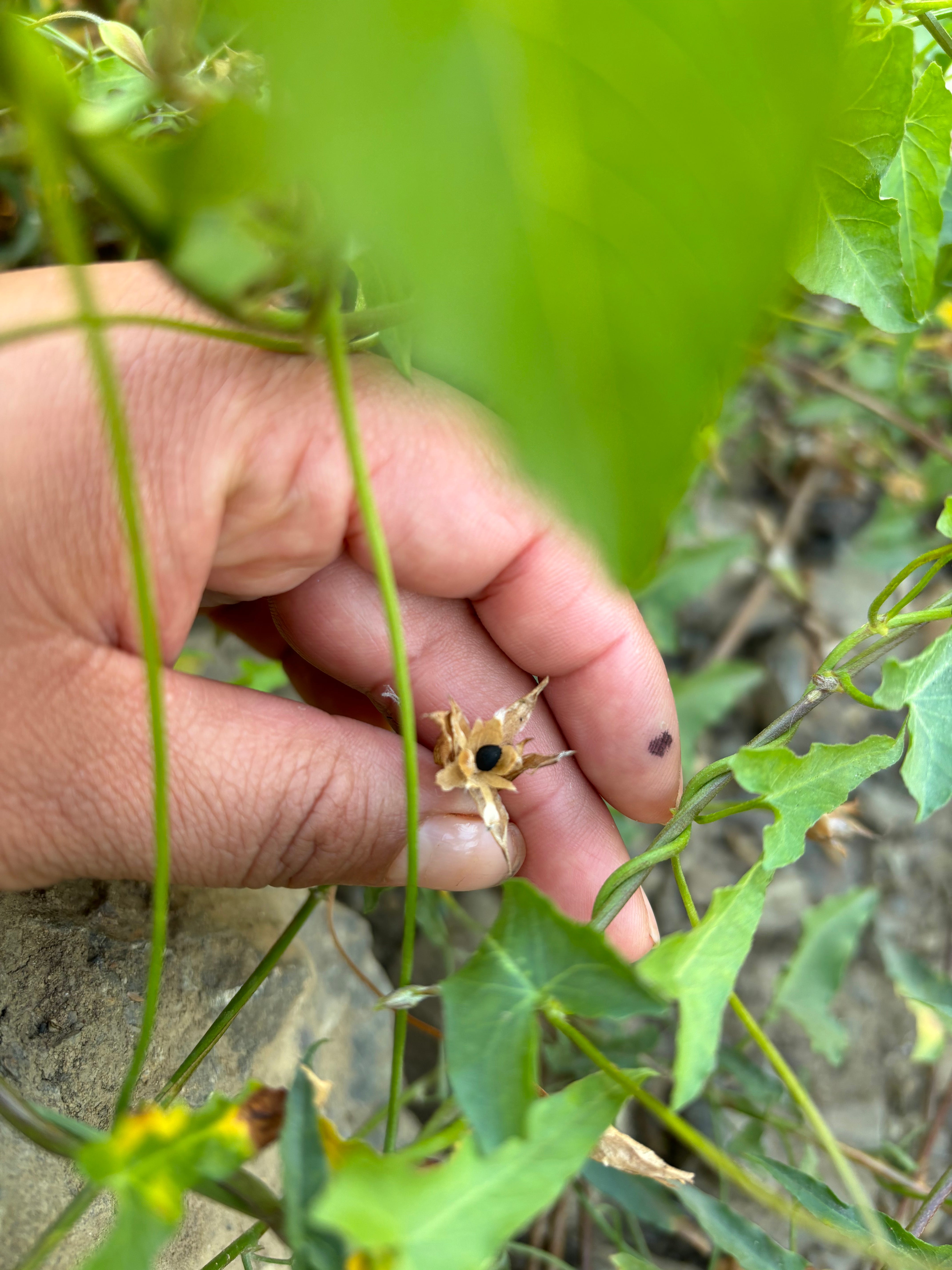
Acknowledgement
This guidance was inspired by Moving Mountains and developed as part of Meandros, a project by Lauren Bon and Metabolic Studio that reimagines the urban watershed as a site of ecological repair, mutual aid, and public art. Rooted in collaboration with community organizations, Meandros transforms paved city spaces into regenerative micro-forests, reconnecting lost water pathways and restoring soil using landslide debris and rainwater.
Each site becomes part of a city-wide network — a cyborg watershed — where art and ecology meet in active stewardship, cultural engagement, and Indigenous land acknowledgment. If you're part of a nonprofit aligned with environmental justice, urban ecology, or land stewardship and have a site to transform, reach out to Metabolic Studio at kmajewski@metabolicstudio.org to begin a conversation about co-creating a Meandros installation.