

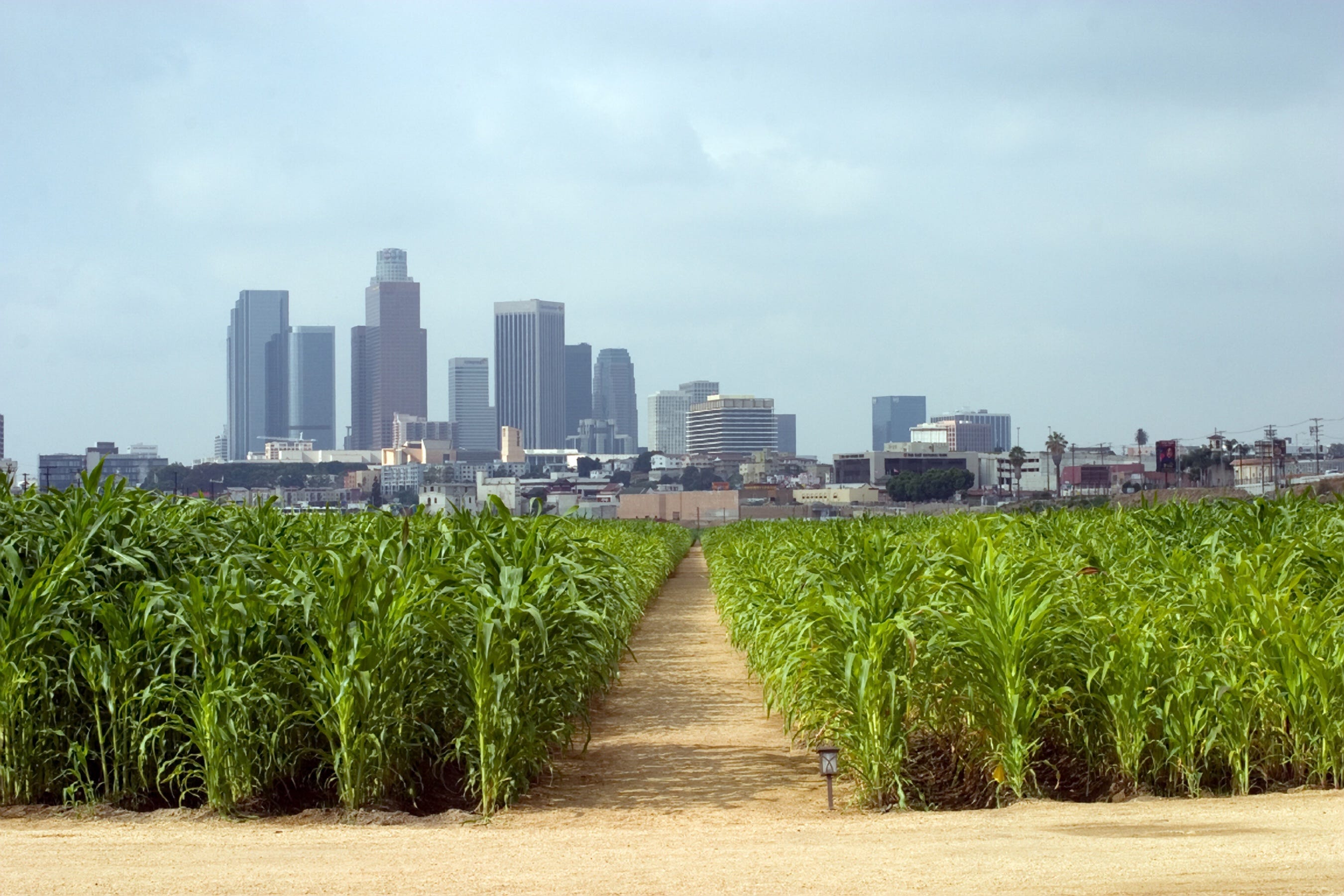
Lauren Bon’s Not a Cornfield (2005-2006) existed for one agricultural cycle, a million kernels of corn sown, tended and harvested to remediate a brownfield site alongside the Los Angeles River. The water from the LA River, even though it was considered surplus and allowed to flow out to sea, could not be diverted to the brownfield site to support the crop pulling toxicity from soil—California’s water use laws deemed it illegal. That changed with Bending the River.
This introduction to Lauren Bon and Metabolic Studio’s Un-development 2 tours explains how the immovable bureaucracy that constrained the flow of the LA River set the stage for a successful challenge, and a new perspective on what is possible. Now, in a city that has relied on imported water for over a century, we’re changing the narrative about how we care for our resources—the LA River is returning to its historic floodplain. A transcription of this video is below.
Follow along and learn more about Un-development 2, and the ethos of un-development.
Un-development 2 - The Path from Not a Cornfield to Bending the River
Welcome to Metabolic Studio. My name is Andrea, and I'm going to give you a little bit of an introduction to the project today. We are standing here at the Metabolic Studio site, and I hope you all have had a chance to visit the LA State Historic Park, which is right across the street.
Before it was a park, it was a train yard, considered a brownfield (site) here in Los Angeles and in 2005, Lauren Bon created a one-year agreement with the State Park System to plant a 32-acre cornfield. And that project had multiple benefits. It was, a) to clean the soil - we know that corn is a phytoremediator. And b) also to bring a new perspective to what this space could be.
While that corn was growing, it was clear that the corn needed water. And the LA River is right here. It just makes sense to water this piece of land with the LA River water. If you can imagine where we are today without all the concrete, without all the asphalt, without all these buildings, this was the floodplain of the Los Angeles River. As the rains came down, this area would have flooded, and this area would have gotten all of its water needs for the year, because it was the floodplain. It was a very fertile piece of land.
So, Lauren took some water trucks down there, just filled them up and watered the corn, until the City (of LA) folks told her that she can't do that for many reasons, liability being a big one. Lauren asked “What if we were able to water this piece of land with water from the Los Angeles River?” That created a project that we call Bending the River. And this project's been going on for over ten years, and we are now almost on the 20-year anniversary of the Not a Cornfield project.
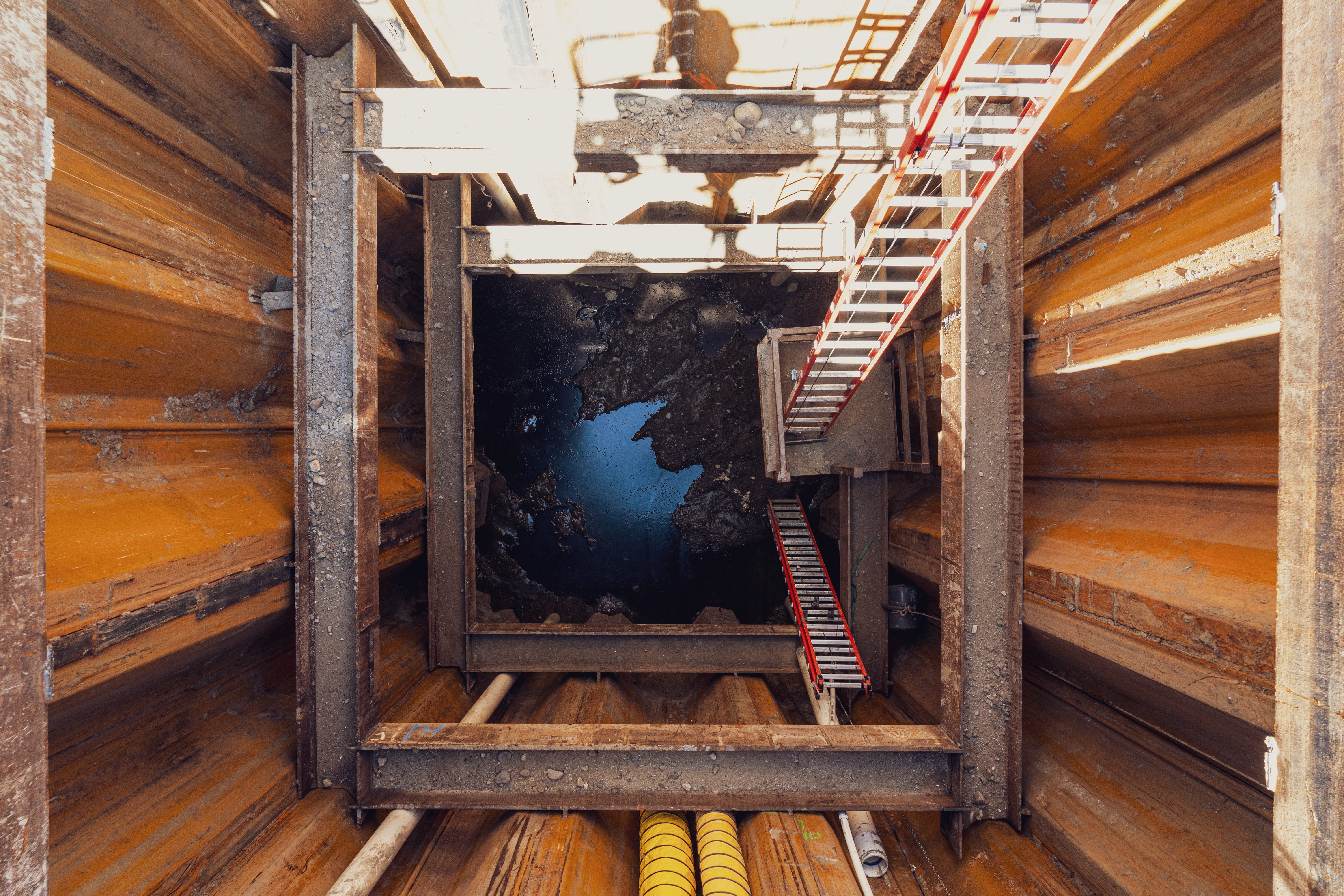
What we have now built, is a well on our property called the Mother Well. We have infrastructure in the LA River channel that will help move the water from the LA River low-flow channel into the well so that eventually we can water LA State Historic Park.
All these projects along the way have created smaller projects that we sort of think of as tributaries to the river. We're going to talk about the soil that came from the Mother Well, and the concrete in the material that we pulled out of the river, in order to do the construction. What did we do with that material?
And then we have a lot of soil remediation that has been done in order to prepare for this water to come in to the property. So we have all that we want to share with you today, and all kinds of soil repairing methodologies that we've tried here at our studio.
Metabolic Studio’s Un-development 2 Tours
Un-development is an ethos that challenges the un-contested value of further development, embodied in Metabolic Studio’s work as Un-development 1, a former tow yard that has become a thriving floodplain ecosystem, and Un-development 2, a Standard Oil warehouse becoming a new riverbed for Bending the River. Bending the River is a durational artwork diverting a portion of the Los Angeles River from its current concretized path back to its ancestral floodplain on a four-acre spreading ground at LA State Historic Park. That diverted water will flow from the river to the park through Un-development 2.
Part of Un-development 2’s transformation involves removing toxicity from the soil through bioremediation, performing experiments testing different plants’ capacity to pull lead and petrochemicals from the soil, and measuring the rate of soil repair. Another part of the warehouse is dedicated to studying soil excavated during the construction of the Mother Well. More than 50 feet deep, the Mother Well connects the LA River to Metabolic Studio, and is the first step in our water conveyance system for Bending the River. Follow along!
The most significant story in the world of water. Los Angeles HAD water, our unwitting "improvements" to dominate Nature...
destroyed the flow. This restoration of a natural system is inspirational.
Love this! Will there be actual tours?