
Special Projects in Archiving
Metabolic Studio's Portfolio Boxes

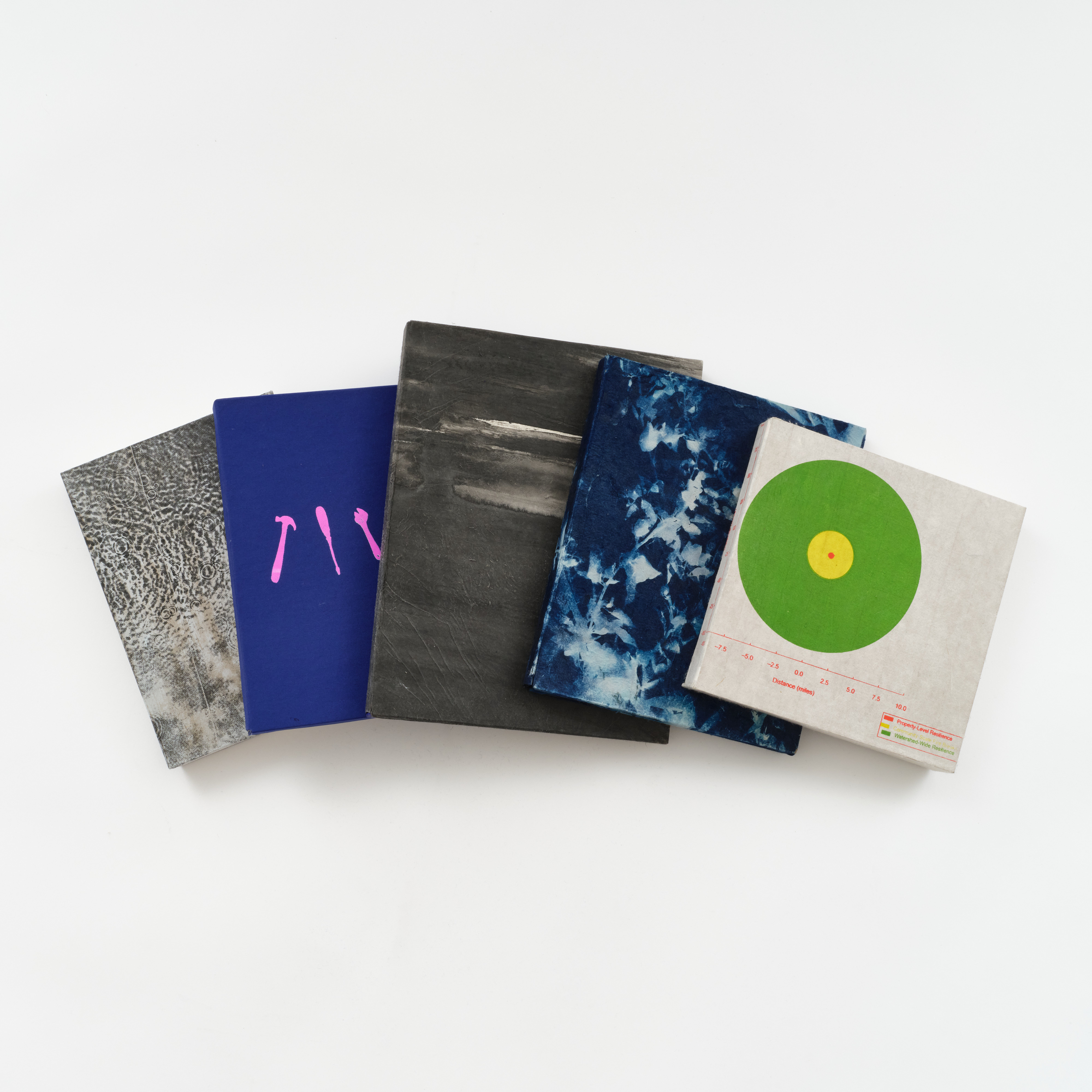
Metabolic Studio’s Special Projects In Archiving is instigated when we see the potential loss or the undervaluing of an important marker of cultural history that is connected to the Studio’s signature actions.
At times, Special Projects In Archiving answers to urgency when material history is about to disappear – such as rebuilding the Hoist House at the Cerro Gordo silver mine and the cataloguing and replanting trees from the razed South Central Farm in the Huntington Ranch Garden. Other cases are about bringing together works that expand our understanding. In 2013, we brought a network of archives together to instigate a digitized and accessible collection recognizing the history of the Los Angeles Aqueduct in its centennial year.
This year, for Printed Matter’s LA Art Book Fair, we assembled a series of portfolio boxes commemorating some of our Special Projects in Archiving, along with other remarkable works highlighting the breadth of Metabolic Studio’s performances and actions. Each box includes a foreword from Lauren Bon, reprinted below.
The Fires We Live With: Lita Albuquerque
Southern California has always been a theater of fire — a region made combustible not only by chaparral and Santa Ana winds, but by the architecture of desire itself. People settle in terrain that wants to burn, plant water-hungry ornamentals, and resist ecological clearing in the name of aesthetics or property value.
In November 2018, the Woolsey Fire swept through the Santa Monica Mountains with a fury stoked by climate change, longer fire seasons, hotter winds, and the steady encroachment of human ambition into high-fire zones. One of those zones was home to the artist Lita Albuquerque. Her house — filled with artworks, archives, and decades of creative life — was consumed by flames. The fire moved fast. What followed moved slowly: a process of grieving, salvaging, remembering, and beginning again.
In the days after the fire, we reached out to Lita through our friend Rochelle Fabb, who had long worked with both Lita and Metabolic Studio. We invited Lita and her husband Carey to stay at our residence in Century City — the Quincy Jones Barn, itself a sanctuary for artists, memory, and reconstruction.
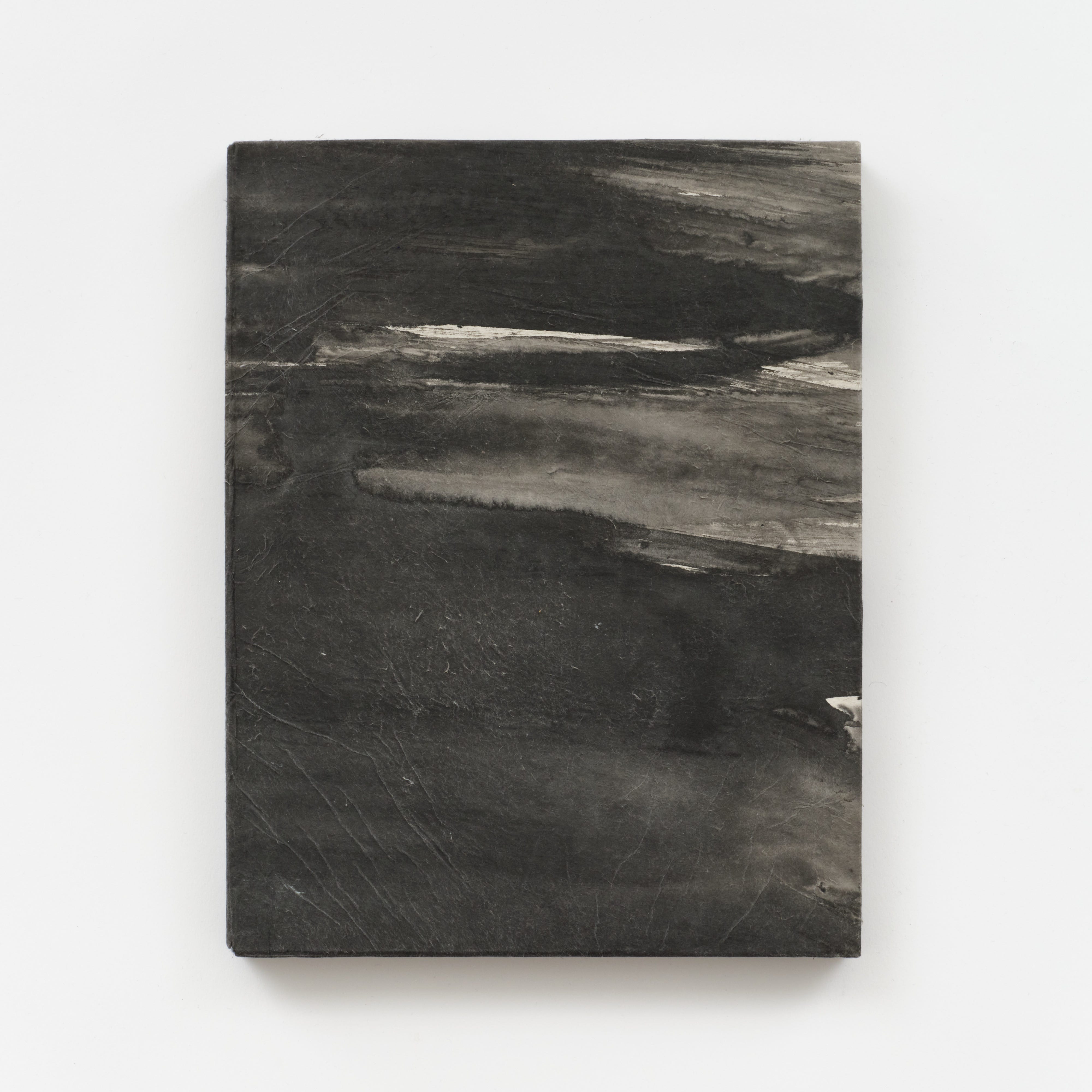
This box, assembled as part of Metabolic Studio’s Special Projects in Archiving, documents that year at the Barn — a time when Lita began to gather and interpret what remained. Her dear friend Amy Sioux, along with Amy’s partner Dai Sakai, worked for months at the site of the burned home, sifting through ash and debris, recovering fragments of Lita’s life and work. Their efforts were not just archival — they were intimate, ceremonial, and quietly radical. In 2020, they were awarded the CHORA Prize for this work — named after the pre-conceptual space described by Plato: chōra, the matrix from which form arises, more real than the thing itself.
Inside this box are objects that survived the fire, and works created in its aftermath: excerpts from Lita’s notebooks recalling the sound of firefighting planes seen by her son as a child; photographs by Metabolic Studio’s Optics Division, printed in ink made from the char; and material arrangements created at the Barn — where fire became both medium and memory.
This archive does not simply commemorate a loss — it reveals the systemic conditions that made such loss inevitable. In City of Fear, Mike Davis writes not only of disaster, but of the cultural choreography that develops when a society builds itself around existential insecurity. Fire, flood, and ambition are not opposites — they are part of the same dance. In a climate of risk and the illusion of safety, the very dreams we build become accelerants.
This box is a record of what burned — and what persists.
Fires of the West from Metabolic Studio’s Optics Division
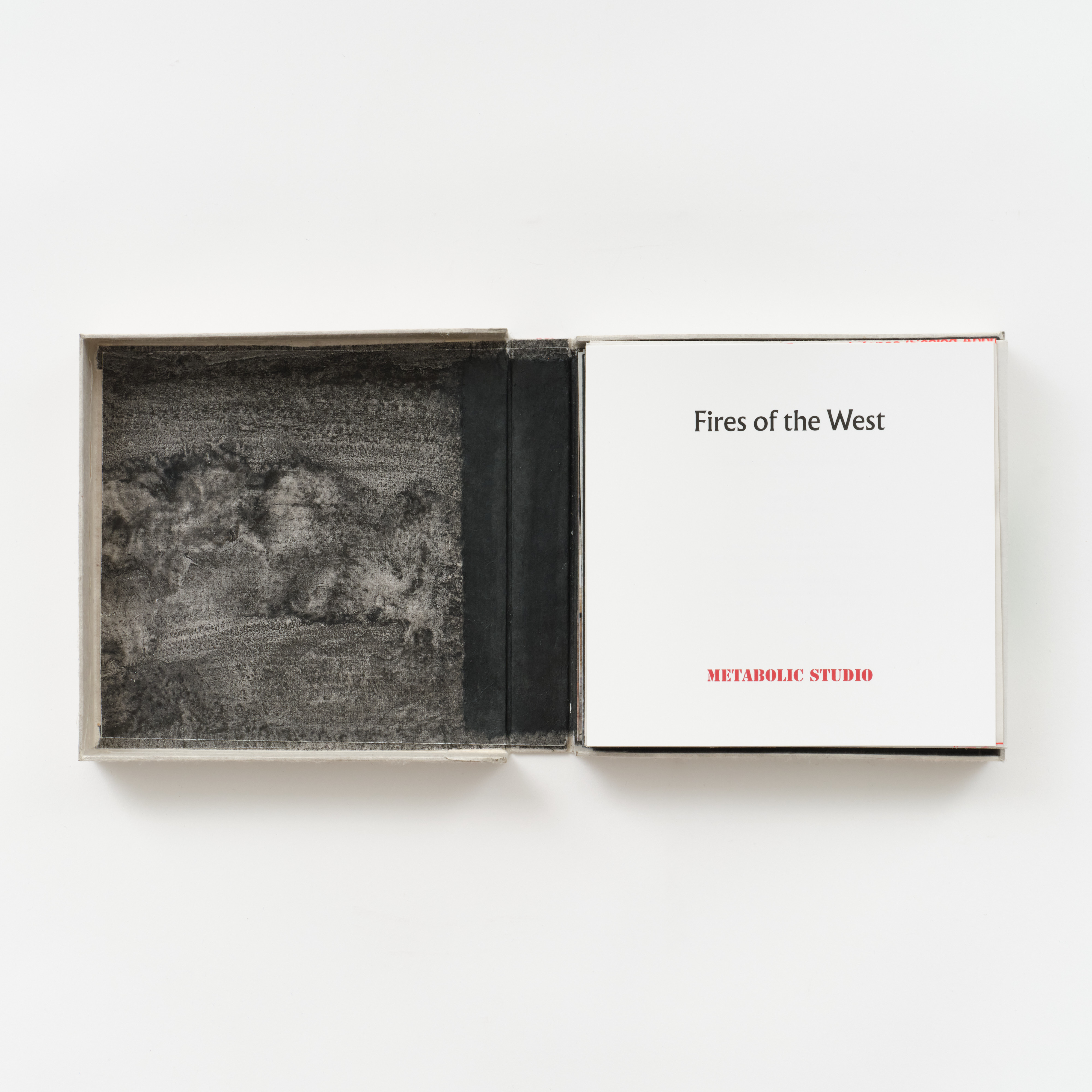
This box contains more than pictures. It holds an ethic. A practice. A refusal to look away. And a challenge: to see the fires, and still imagine the forest.
For over a decade, the Optics Division of Metabolic Studio has taken on the task of witnessing the cascading effects of climate change, especially as they echo through the forests of Southern California. We have worked in the space between the intimacy of the camera and the abstraction of the satellite image, searching for a way to document what exceeds both the lens and the map — the slow violence of drought, the sudden violence of fire, and the deep entanglements between land, infrastructure, and memory.
These images arise from the broader arc of Metabolic Studio’s work in the Intermountain West, where entire hydrological systems have been reengineered on a planetary scale. The forests — like the rivers, like the deserts — now bear the imprint of this transformation. They burn differently. More often. More intensely. In response, we approach the act of seeing not as passive observation, but as engagement. As responsibility. As a first step in repair.
To photograph fire is to enter into a relationship with loss — but also to trace the outlines of resilience. These are not just documents. They are offerings. They gesture toward a future that demands more than survival. A future rooted in resurgence.
Shimmering Between Wondering
Eugenia Perpetua Butler: Documents of Invisibility
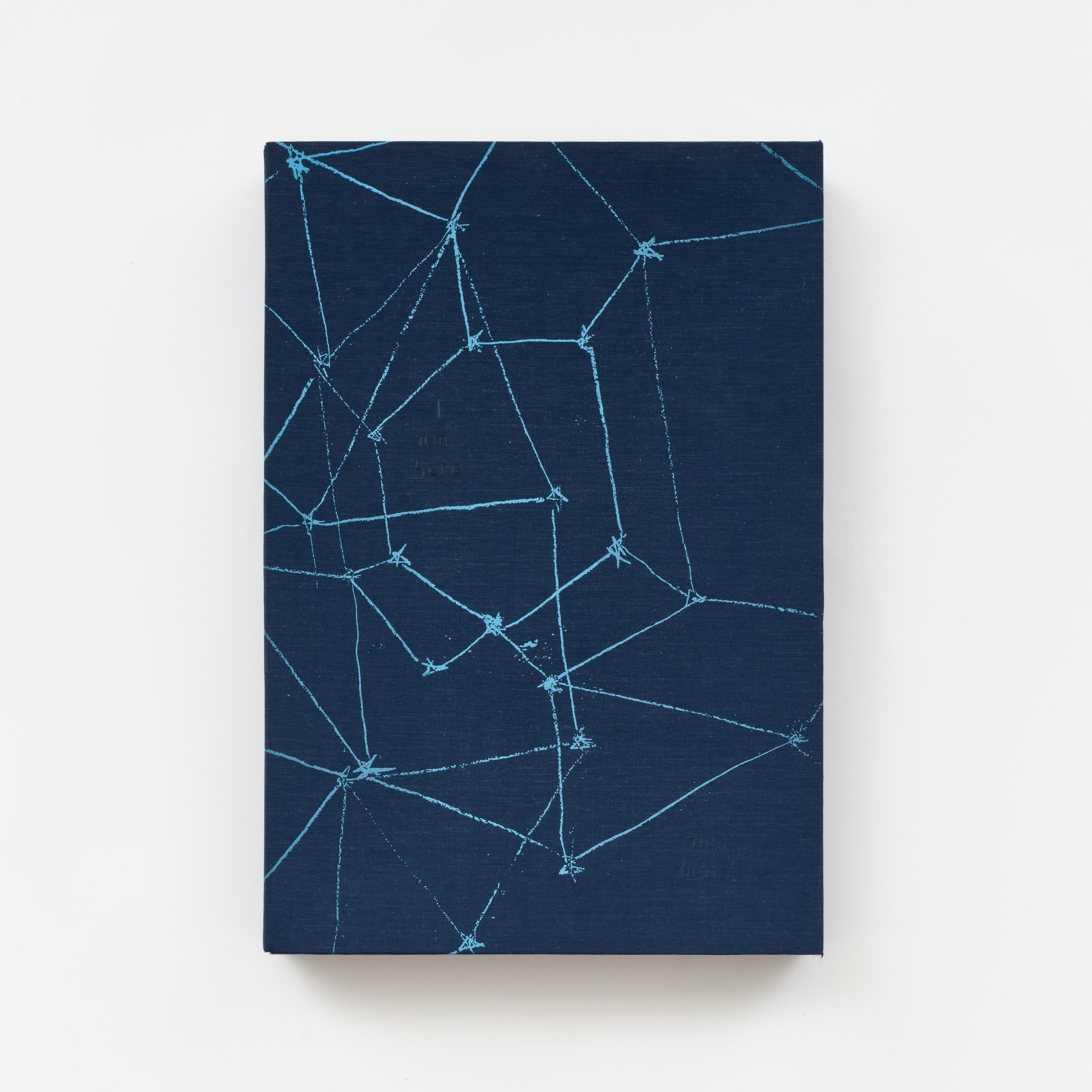
What is a box, if not a container for longing? A shaped emptiness waiting to be filled — or remembered. This particular box, made by Corazon del Sol, belongs to a lineage of boxes, part of an unfolding archive dedicated to the life and work of her mother, Eugenia Perpetua Butler.
Eugenia P. Butler made boxes that weren’t just objects — they were transmissions. Part reliquary, part question mark, they held stories that couldn’t be flattened. They whispered. They resisted conclusion. Her conceptual practice lived within these containers — uncertain, luminous, and charged.
In 2024, these boxes were gathered and exhibited by The Box Gallery — a space whose very name feels like an invitation to be held. Under the direction of Mara McCarthy, The Box offers something rare in contemporary art: a sense of return. It doesn’t just display work — it protects it. It becomes, if only briefly, the arms of a good mother. Steady, sheltering, and unafraid of the unruly. A platform for the intergenerational, the radically intimate, the unspoken.
And what is a box, after all, if not a womb? A place where ideas gestate. Where memory and imagination co-mingle. Where the future is still forming. Corazon’s box carries this same promise: that inside what appears contained, a new world may already be unfolding.
Life is Abundant
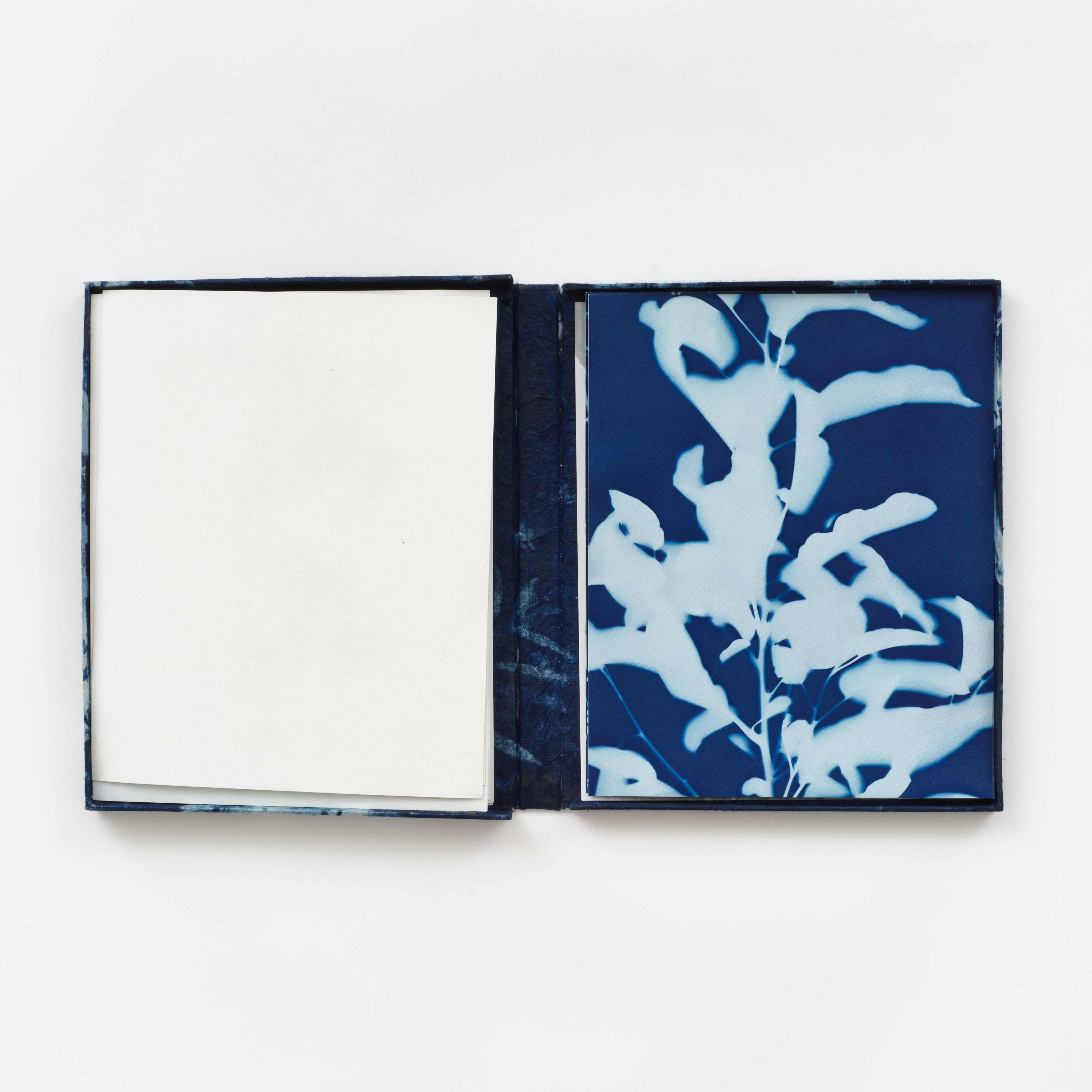
In May 2024, a landslide fell across a coastal highway in California. By standard protocol, such debris is treated as waste — cleared quickly and carted to a dump. But what if we understood landslides not as disruption, but as ecological redistribution?
We intervened. Instead of allowing this displaced soil to be discarded, it was redirected to Metabolic Studio, located 20 miles inland beside the LA River. There, the Metabolic Studio FarmLab team — Kelly Majewski, Milli Macen-Moore, Diego Zapata, Alex Tanasi, Leigh Adams, Michel Bréard, Wendy Isabella Escobar Procopio, and Kat Superfisky — collaboratively explored what might emerge from this bioregional transposition.
Could coastal soil germinate beside the river? What signals would dormant seeds receive in their new home? This box presents our findings: signs of abundance, new growth, and unexpected life. The photograms included here are by Farmlab's Wendy Isabella Escobar Procopio, in collaboration with Richard Nielsen, co-founder of Metabolic Studio’s Optics Division. The images capture not only the process of creation, but the vitality that emerged.
To collect this box is to participate in a quiet refusal of erasure — of that soil, and the life held within it. An invitation to see even disaster as a carrier of potential.
Magic Happens: The Woman's Building
Between 2016 and 2022, Metabolic Studio convened a series of gatherings rooted in feminist art action — intentional acts of presence, memory, and protection. These events were part of a collective effort to honor, revive, and ultimately preserve the legacy of the Woman’s Building, an iconic feminist art space that operated in Los Angeles from 1973 to 1991.
Located just next door to Metabolic Studio in an aging brick structure, the Woman’s Building had once served as a vital incubator for feminist pedagogy, performance, and artistic experimentation. As developers closed in on the property and the risk of demolition grew, the gatherings at Metabolic became more than commemorative — they became strategic.
By bringing together artists, archivists, and cultural workers who had shaped or been shaped by the Woman’s Building, we catalyzed a three-year campaign that culminated in the building receiving Historic Cultural Monument status from the City of Los Angeles on June 8, 2018. These acts of gathering — resistance through ritual, storytelling, and spatial reclamation — reaffirmed the role of feminist networks in shaping the urban fabric and safeguarding its histories.
Dogtown, the neighborhood that holds both the Woman’s Building and Metabolic Studio, sits adjacent to the train yards in a light industrial district along the LA River. Its name — colloquially given — may come from the stray dogs that once roamed its streets, but it also gestures to a wildness that managed to persist in a zone largely overlooked by capital investment. The land beneath it, part of the LA River’s historic floodplain, was once among the most fertile and abundant in the basin. After the river was encased in concrete in the 20th century, the area became marginal — undesirable, undervalued, and yet somehow, a sanctuary. It was precisely this liminality that made spaces like the Woman’s Building possible.
When we invited some of the original members and artists of the Woman’s Building to Metabolic Studio in 2016, it was clear that the impulse to gather was still alive. Portraits were taken. Stories were shared. And through these encounters, a collective desire surfaced — not just to preserve the past, but to animate it. Animating the Archive, a Metabolic Studio Special Projects in Archiving initiative to care for, interpret, and circulate the legacy materials of the Woman’s Building, emerged from these gatherings.
This book — and the box that holds it — is an offering. A vessel of memory, image, and shared labor. It arises from a neighborhood shaped by water, industry, resistance, and care. We hope it transmits the energy we felt while gathering here along the LA River, and honors what has been cultivated on this land over the past fifty years.
Thanks to Carolyne Acyguer and Jen Curtis, our archiving team, who together with Laurelyn Kruse anchored this Special Project in Archiving.
Enchanting the Floodplain
Metabolic Studio works within a triangle of transmission connecting three desiccated water bodies: Owens Lake, once a vast inland sea at the foothills of Mount Whitney; the Salton Sea, California’s lowest sink and an ecological bellwether; and the Los Angeles River, whose once-wild course has been straightjacketed in concrete.
Over the past decade, Metabolic Studio and the Sonic Division sound artists have activated this triangle through ritual practice, radio transmission, satellite exchange, and freeform sonic experiments — often with handmade instruments and a deep commitment to place-based listening.
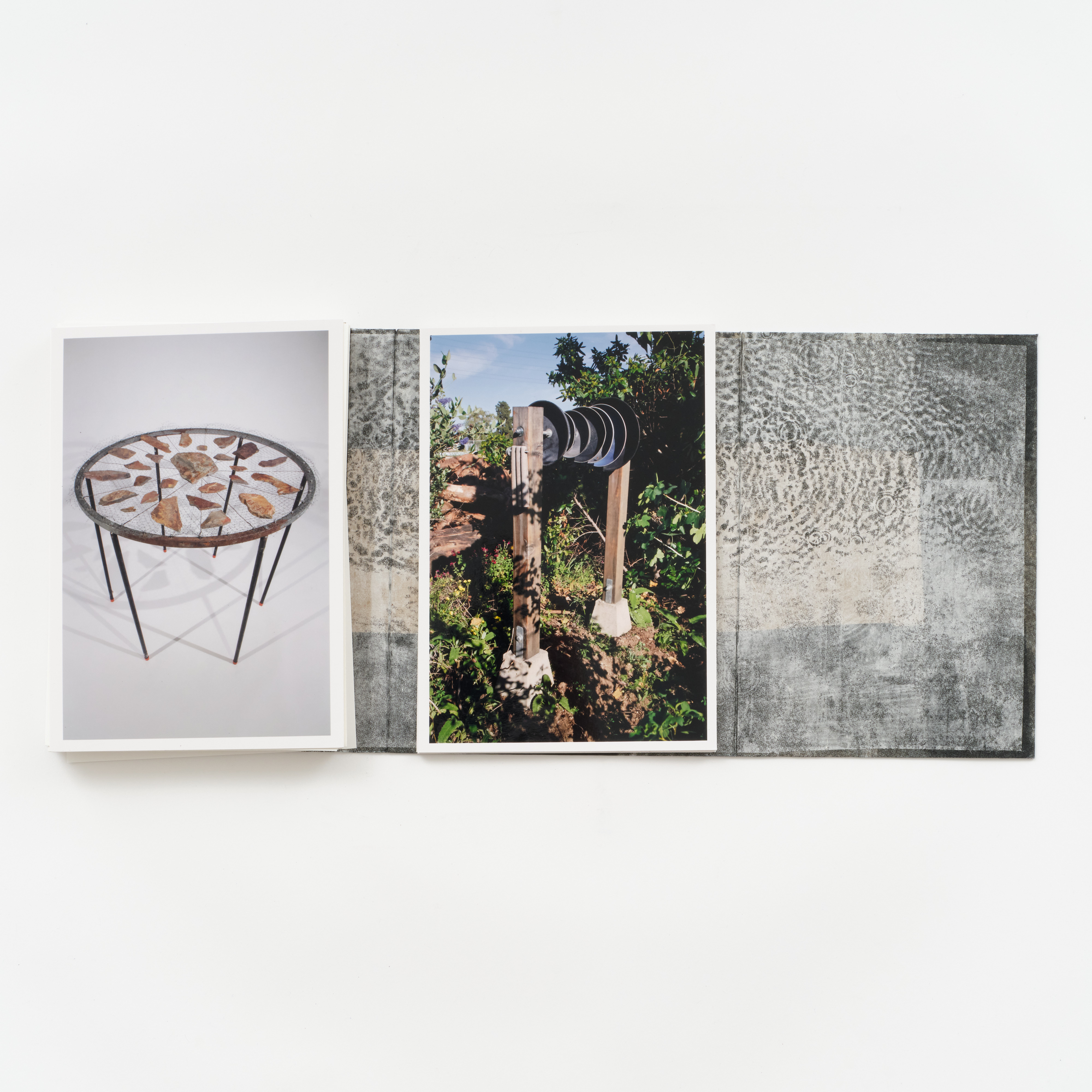
Within this evolving practice, Douglas Lee has become a central figure. Collaborating with the Sonic Division — David Baine, Aaron Ebensperger, Dani Lunn, O-Lan Jones, and Nina Sarnelle — Douglas has not only participated in sound-making, but has also built the physical instruments themselves. These sculptural tools often echo the Baschet Brothers’ acoustic sound reflectors and carry within them traces of Metabolic Studio’s performative and sonic actions, such as One Hundred Mules Walking the Los Angeles Aqueduct (2013).
This box, the first folio dedicated to Douglas Lee’s sonic work at the Studio, serves as an exhibition in a box — a transportable record of instruments too large to travel. Inside are photographs, object studies, and a link to recordings of the instruments themselves, inviting you to listen to the vibration of metal and wood, to resonance shaped by water memory and ritual intent.
To open Enchanting the Floodplain is to enter a frequency field — a space where degraded landscapes might be re-tuned through attention, improvisation, and care.